
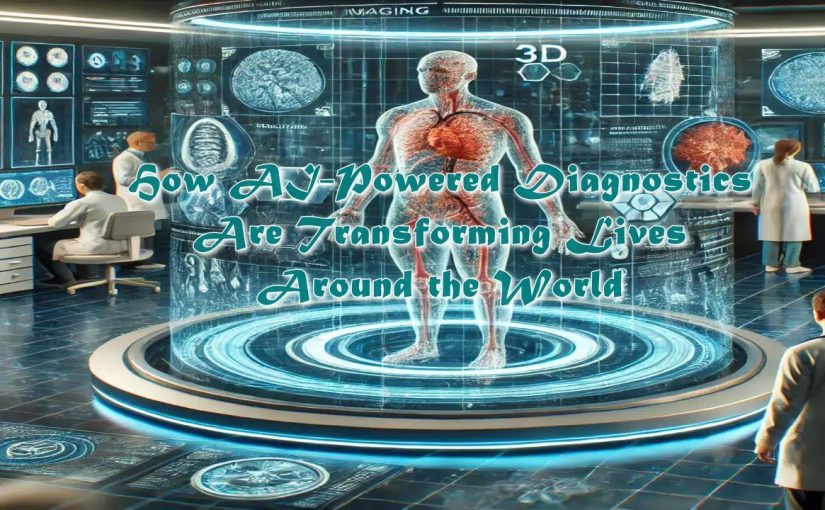
Imagine a world where identifying a rare disease takes seconds, not months. Where a diagnosis doesn’t depend solely on the skill or availability of a specialist. Sounds futuristic? Not anymore. Thanks to AI-powered diagnostics, this world is becoming a reality. Systems like BastionGPT — a compliant AI designed for healthcare professionals — are paving the way for smarter, faster, and more accurate diagnostic tools. Curious about how this works? Keep reading to uncover how these innovations are changing lives, one diagnosis at a time.
What AI Brings to the Table
Traditional diagnostic methods rely heavily on human expertise. A doctor’s judgment, a radiologist’s eye, or a pathologist’s skill. While these methods have served us well, they’re not without flaws. Human error. Limited resources. And time. Lots of time.
The solution? Artificial intelligence.
AI systems analyze data with incredible speed. They sift through mountains of medical information—lab results, imaging scans, patient histories—to identify patterns no human could spot. For example, consider cancer detection. Studies show that AI models can flag early signs of breast cancer in mammograms, sometimes better than radiologists. The result? Earlier treatments. Better outcomes.
And it doesn’t stop there. From predicting strokes to identifying diabetic retinopathy, AI is stepping up in countless ways. But how does this work in practice? Let’s dig deeper.
Real Stories, Real Impact: AI in Action
Picture this. A hospital in India, where access to specialists is limited. A patient arrives with blurred vision and unexplained headaches. The local doctor uses an AI diagnostic tool to analyze the patient’s retinal scans. Within minutes, the system flags early signs of diabetic retinopathy. Treatment begins immediately, saving the patient from potential blindness.
Or take the case of rural clinics in Africa. Many of these lack advanced lab facilities. But with AI-powered diagnostic kits, healthcare workers can detect diseases like malaria or tuberculosis in record time. These tools are portable, efficient, and accurate.
Even in wealthier nations, AI is making waves. Remember the scramble to identify COVID-19 cases early? AI helped analyze chest X-rays and CT scans to quickly spot signs of infection. Doctors could prioritize care for critical patients, reducing strain on overwhelmed hospitals.
These aren’t just anecdotes. They’re proof that AI is a global equalizer. Bringing high-quality care to places that need it most.
Why Speed Matters in Diagnostics
Have you ever waited weeks for test results? The stress. The uncertainty. It’s exhausting. AI-powered diagnostics slash that waiting time dramatically.
Take genetic testing. Previously, mapping a person’s genome for rare diseases could take months. With AI? Days. Sometimes hours. It’s like comparing a bicycle to a jet plane. Both get you there. But one’s a lot faster.
This speed doesn’t just reduce anxiety for patients. It saves lives. Think about sepsis, a life-threatening condition that requires immediate action. AI tools can analyze patient data in real time, flagging warning signs before symptoms worsen. It’s quick. It’s efficient. And it works.
The Balancing Act: Accuracy Meets Ethics
Speed is essential, but accuracy? Non-negotiable. Imagine being misdiagnosed by an AI system. Scary thought, right? That’s why these tools undergo rigorous testing before they’re implemented.
AI learns from data. The more diverse and comprehensive the data, the better it performs. But here’s the catch: biased data leads to biased outcomes. If an AI system is trained primarily on data from one demographic, it might not perform well for others.
This brings us to a critical point. Developers must prioritize inclusivity. By ensuring datasets represent people from all walks of life, AI becomes not just a tool for the privileged but for everyone.
Collaboration is Key
You might be wondering: does AI make doctors obsolete? Not at all. Think of it as a partnership. A skilled doctor with AI support is like a chef with a recipe book. The chef still makes the final call. But the book? It’s a helpful guide.
In fact, studies show that combining AI with human expertise produces the best results. For instance, AI might highlight potential issues in a radiology scan, but the radiologist interprets those findings within a broader clinical context. It’s teamwork at its finest.
What’s Next for AI Diagnostics?
The potential is limitless. Researchers are exploring AI’s role in mental health diagnostics, using natural language processing to detect signs of depression or anxiety from speech patterns. Others are looking at how wearable devices, like smartwatches, can integrate AI to monitor heart health continuously.
But challenges remain. Regulatory approvals. Data privacy concerns. And public trust. Innovations are already addressing these issues, focusing on compliance and security while delivering reliable results. Yet, the journey is far from over.
Wrapping It All Up
AI-powered diagnostics aren’t just a technological advancement. They’re a lifeline. A bridge between patients and better healthcare. From speeding up disease detection to making care accessible in remote regions, these tools are changing the game. And the best part? This is just the beginning.
Curious to learn more about AI in healthcare? Explore the incredible innovations and possibilities at BastionGPT. The future of diagnostics is here. Don’t miss it.